

Introduction: A Turning Point for ESG Claims in Canada
Environmental, Social, and Governance (ESG) commitments have become central to corporate strategy in Canada. Investors, consumers, regulators, and business partners increasingly expect organizations to demonstrate genuine sustainability practices rather than aspirational marketing language. In response to growing concerns about misleading environmental claims, the Canadian federal government has introduced significant anti-greenwashing amendments to the Competition Act.
These amendments fundamentally change how ESG and sustainability claims are regulated in Canada. Businesses that promote environmental benefits, climate commitments, or “net-zero” goals now face heightened scrutiny, increased enforcement risk, and expanded exposure to litigation.
For Canadian companies—particularly those operating in regulated, consumer-facing, or investor-driven industries—understanding these changes is no longer optional. This article explains what the amended Competition Act means for ESG claims, outlines the legal risks associated with greenwashing, and provides practical guidance on compliance and risk mitigation.
Understanding Greenwashing and Why It Matters
What Is Greenwashing?
Greenwashing refers to false, misleading, or unsubstantiated claims about a product’s or business’s environmental benefits. This can include:
-
Overstating sustainability achievements
-
Using vague or undefined environmental terms (e.g., “eco-friendly,” “green,” “clean”)
-
Making future climate commitments without credible plans
-
Highlighting minor environmental benefits while ignoring significant negative impacts
Historically, greenwashing enforcement in Canada was limited and often reactive. However, increased public awareness, global regulatory trends, and investor pressure have prompted a more aggressive regulatory approach.
Overview of the Competition Act Amendments
Why the Act Was Amended
The amendments to the Competition Act reflect a broader global movement toward holding businesses accountable for ESG representations. Regulators recognized that misleading environmental claims distort markets, undermine consumer trust, and disadvantage businesses making legitimate sustainability investments.
The new provisions aim to ensure that environmental and climate-related claims are truthful, specific, and supported by evidence.
Key Changes to the Competition Act
The amended Act introduces explicit provisions targeting environmental representations, including:
1. Stricter Standards for Environmental Claims
Businesses must now ensure that environmental claims are:
-
Accurate
-
Specific
-
Capable of being substantiated
General or aspirational language is no longer sufficient if it implies measurable environmental benefits.
2. Burden of Proof on Businesses
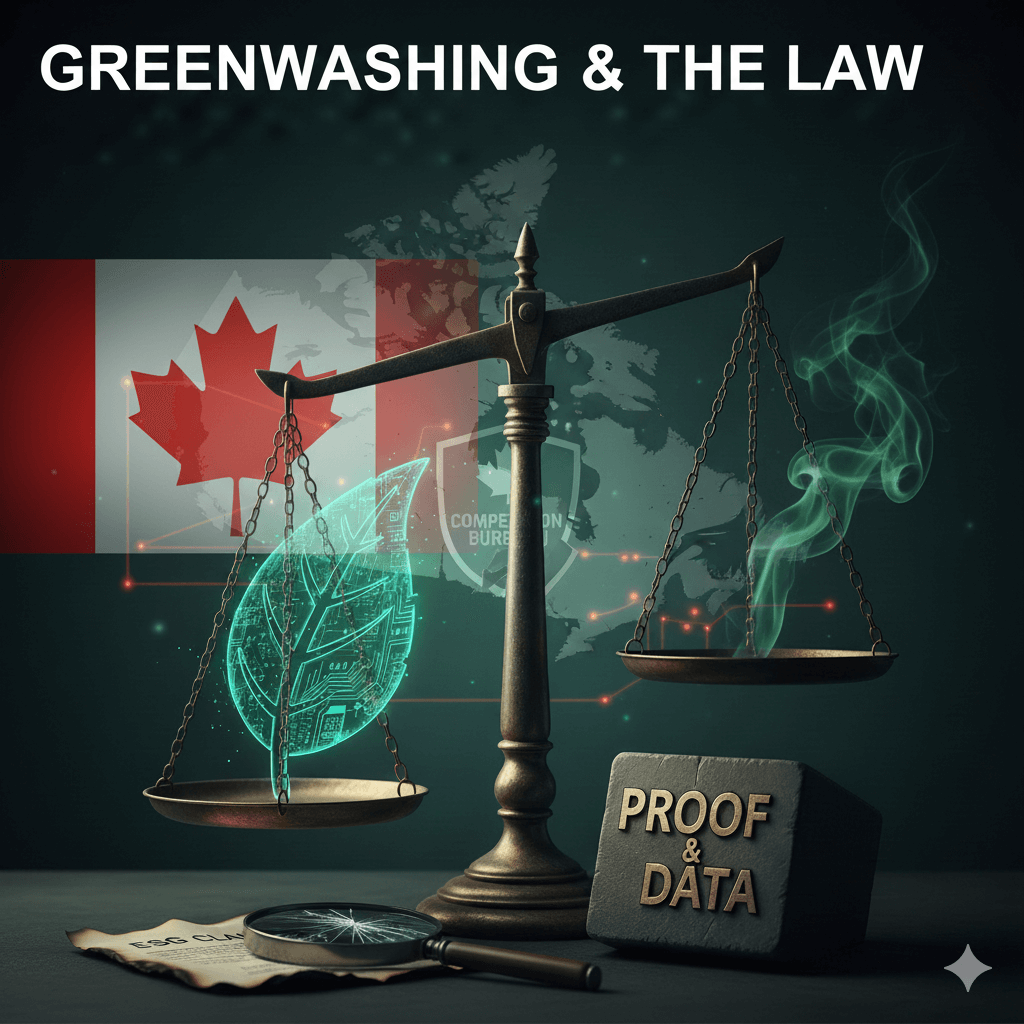
A major shift is that companies—not regulators—bear the burden of proving that their ESG claims are accurate. This means documentation, data, and methodologies must be available to support all public sustainability statements.
3. Expanded Scope of Enforcement
The amendments apply broadly to:
-
Marketing materials
-
ESG and sustainability reports
-
Investor communications
-
Product packaging and labeling
Even statements made primarily for investors or stakeholders may be scrutinized if they influence market behavior.
ESG Claims Under the Microscope
What Types of Claims Are Most at Risk?
Certain ESG and sustainability claims are particularly vulnerable under the amended Act, including:
-
Net-zero or carbon-neutral commitments
-
Claims about emissions reductions or offsets
-
Statements about renewable energy use
-
Assertions of sustainable sourcing or supply chains
-
Environmental impact comparisons with competitors
Claims that rely on future goals—rather than current performance—are especially risky if they lack clear, actionable plans.
Vague Language Is No Longer Safe
Words such as:
-
“Green”
-
“Clean”
-
“Environmentally responsible”
-
“Sustainable”
can trigger regulatory scrutiny if they are not clearly defined and supported by evidence. The Competition Bureau has signaled that implied claims can be just as problematic as explicit misrepresentations.
Litigation and Enforcement Risks for Canadian Businesses
Increased Competition Bureau Powers
The Competition Bureau of Canada now has enhanced authority to:
-
Investigate ESG and environmental claims
-
Seek administrative monetary penalties
-
Require corrective advertising
-
Pursue compliance agreements
Penalties for misleading representations can reach millions of dollars, particularly for large corporations.
Private Actions and Class Litigation
Beyond regulatory enforcement, the amendments increase exposure to:
-
Private actions
-
Shareholder lawsuits
-
Consumer class actions
Investors may allege that misleading ESG disclosures affected share value, while consumers may claim they were induced to purchase products based on false environmental representations.
Reputational and Commercial Damage
Legal risk is only part of the equation. Allegations of greenwashing can lead to:
-
Loss of investor confidence
-
Consumer backlash
-
ESG rating downgrades
-
Increased scrutiny from lenders and insurers
In today’s market, reputational harm can be as damaging as financial penalties.
How These Changes Affect Different Types of Businesses
Public Companies and Issuers
Public companies face heightened risk due to:
-
ESG disclosures in annual reports
-
Sustainability-linked financing arrangements
-
Investor communications and proxy materials
Inconsistent ESG messaging across regulatory filings, marketing materials, and public statements can create enforcement vulnerabilities.
Private Companies and Startups
Private companies are not immune. Startups and growth-stage businesses often rely heavily on ESG narratives to attract investors and customers. However, overstated or poorly substantiated sustainability claims can undermine fundraising efforts and trigger legal risk.
Multinational Companies Operating in Canada
Companies operating across multiple jurisdictions must align Canadian ESG claims with:
-
EU greenwashing regulations
-
U.S. Federal Trade Commission guidelines
-
International sustainability standards
Inconsistencies between jurisdictions can increase enforcement risk in Canada.
Best Practices for ESG Compliance Under the Amended Act
1. Conduct an ESG Claims Audit
Businesses should review:
-
Marketing materials
-
ESG and sustainability reports
-
Investor presentations
-
Website content
The goal is to identify claims that are vague, unsupported, or potentially misleading.
2. Substantiate Every Environmental Claim
Companies should maintain:
-
Reliable data sources
-
Clear methodologies
-
Third-party verification where possible
Documentation should be readily available in case of regulatory inquiry.
3. Align Legal, Marketing, and Sustainability Teams
One of the most common sources of greenwashing risk is misalignment between departments. Legal counsel should be involved early in:
-
ESG strategy development
-
Marketing campaigns
-
Public sustainability commitments
4. Be Careful with Forward-Looking Statements
Future-oriented claims should:
-
Be clearly identified as goals, not guarantees
-
Include timelines and assumptions
-
Be supported by realistic implementation plans
5. Monitor Regulatory Guidance and Enforcement Trends
The Competition Bureau is expected to issue further guidance and actively enforce the new provisions. Staying informed is critical to maintaining compliance.
The Role of Corporate Counsel and Advisors
Corporate lawyers play a key role in helping businesses navigate these changes by:
-
Assessing greenwashing risk
-
Advising on ESG disclosure strategy
-
Supporting compliance investigations
-
Managing litigation exposure
Early legal involvement can significantly reduce both regulatory and reputational risk.

Strategic Opportunity: Turning Compliance into Competitive Advantage
While the amendments introduce risk, they also present an opportunity. Companies that:
-
Invest in credible sustainability practices
-
Communicate transparently
-
Avoid exaggerated claims
can differentiate themselves in the market and build long-term trust with stakeholders.
Authenticity, accuracy, and accountability are becoming core components of corporate value in Canada’s evolving ESG landscape.
Conclusion: Preparing for Canada’s New ESG Reality
Canada’s amended Competition Act marks a fundamental shift in how ESG and environmental claims are regulated. Greenwashing is no longer a reputational concern alone—it is a serious legal and financial risk.
Businesses must treat ESG claims with the same level of rigor as financial disclosures. By proactively auditing claims, substantiating statements, and integrating legal oversight into ESG strategies, organizations can reduce litigation risk while strengthening stakeholder trust.
In an era of heightened regulatory scrutiny, credible ESG practices are not just good ethics—they are sound legal strategy.







Add comment