

In 2026, personal injury law in Canada has undergone a significant transformation, driven by the growing use of data, analytics, and digital technology. Legal professionals, insurers, and courts now rely on data-driven insights, artificial intelligence, and medical analytics to evaluate injury claims with greater accuracy and consistency.
This evolution has reshaped compensation models, litigation strategies, and settlement outcomes, while also changing how accident victims navigate the claims process. As evidence-based decision-making becomes the norm, understanding these changes is essential for anyone involved in a Canadian personal injury claim.
The Rise of Data-Driven Decision-Making in Canadian Personal Injury Law
In 2026, personal injury claims in Canada are no longer assessed solely on narrative testimony and precedent. Instead, data analytics, actuarial models, and predictive tools play a central role in determining liability, damages, and settlement value.
Courts increasingly expect objective evidence supported by data, such as medical outcome statistics, historical settlement benchmarks, and rehabilitation success rates. This shift has reduced subjective interpretation while increasing consistency across personal injury cases nationwide.
Data-driven legal strategies have also helped streamline claims processing, reduce delays, and improve transparency for plaintiffs and defendants alike.

How AI and Legal Analytics Are Reshaping Injury Claims
Artificial intelligence has become a powerful tool in Canadian personal injury law. In 2026, AI-powered legal analytics platforms assist lawyers in:
-
Predicting claim outcomes
-
Estimating compensation ranges
-
Identifying litigation risks
-
Analyzing judicial trends
These tools use natural language processing (NLP) to scan thousands of past rulings, insurance settlements, and medical reports. The result is more accurate case valuation and improved negotiation strategies.
While AI does not replace legal judgment, it enhances decision-making and supports evidence-based advocacy in complex injury claims.
Changes in Compensation Models Backed by Statistical Evidence
One of the most noticeable shifts in 2026 is how compensation is calculated. Canadian courts and insurers now rely heavily on statistical injury valuation models.
Damages for pain and suffering, loss of income, and future care costs are increasingly supported by:
-
Labour market data
-
Inflation-adjusted earnings projections
-
Medical recovery probability models
-
Life expectancy analytics
This data-centric approach aims to ensure fair and proportional compensation while reducing inconsistent awards across provinces.
The Role of Medical Data and Digital Health Records
Medical evidence has always been critical in personal injury law, but in 2026, digital health data has transformed how injuries are evaluated.
Electronic medical records, wearable health devices, and rehabilitation tracking systems now provide real-time, objective insights into injury severity and recovery progress. Courts and insurers value this data because it:
-
Reduces fraudulent claims
-
Supports causation analysis
-
Improves long-term damage forecasting
Medical data integration has strengthened the credibility of legitimate personal injury claims across Canada.
Insurance Industry Adaptation to Data-Centric Claims
Canadian insurance companies have rapidly adapted to the data-driven shift. In 2026, insurers use advanced analytics to assess risk, detect inconsistencies, and determine settlement strategies.
Key changes include:
-
Automated claim triage systems
-
Predictive fraud detection models
-
Data-backed settlement offers
While this has improved efficiency, it has also made the claims process more complex for injured individuals—reinforcing the importance of experienced personal injury lawyers who understand these systems.
Impact on Litigation Strategies for Personal Injury Lawyers
Personal injury lawyers in Canada have had to evolve their litigation strategies to remain effective in a data-driven legal environment.
In 2026, successful legal teams focus on:
-
Data-supported legal arguments
-
Expert testimony grounded in analytics
-
Comparative settlement data
-
Evidence visualization for court presentations
Law firms that leverage data effectively are better positioned to negotiate favorable settlements and succeed at trial.
Regulatory and Privacy Considerations in 2026
With increased reliance on data comes heightened concern over privacy and regulatory compliance. Canadian personal injury law in 2026 operates within stricter data protection frameworks, including enhanced enforcement of privacy legislation.
Lawyers and insurers must ensure:
-
Secure handling of medical data
-
Ethical use of AI tools
-
Compliance with provincial and federal privacy laws
Failure to meet these standards can jeopardize claims and expose organizations to legal penalties.
How Data Is Influencing Settlement vs. Trial Outcomes
Data analytics has significantly influenced whether personal injury claims settle or proceed to trial. In 2026, predictive modeling allows both sides to assess litigation risk with greater accuracy.
As a result:
-
More claims settle earlier
-
Trial outcomes are more predictable
-
Legal costs are reduced
However, complex or high-value injury cases still require litigation when data interpretations differ or liability remains contested.
What These Changes Mean for Accident Victims in Canada
For injured Canadians, data-driven personal injury law has both advantages and challenges.
Benefits include:
-
Faster claim resolution
-
More consistent compensation
-
Stronger evidence-based outcomes
Challenges include navigating sophisticated insurance systems and understanding data-based settlement offers. Accident victims benefit most when represented by legal professionals who can interpret and challenge data effectively.
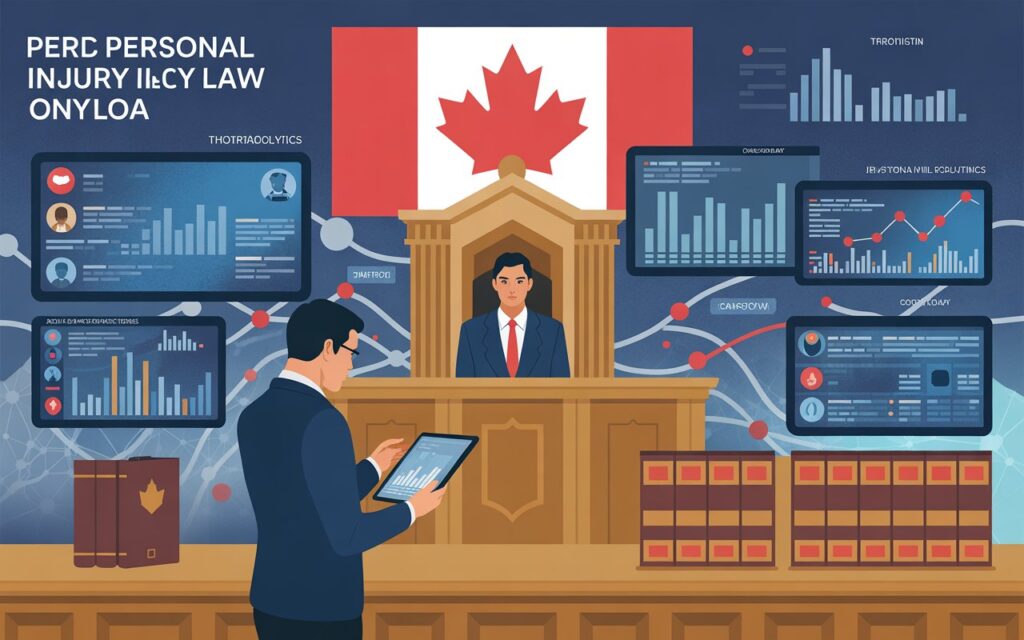
The Future of Data-Driven Personal Injury Law Beyond 2026
Looking ahead, data will continue to shape the future of personal injury law in Canada. Emerging technologies such as machine learning, biometric analysis, and predictive rehabilitation modeling will further refine claims assessment.
By embracing ethical data use, transparency, and human oversight, the Canadian legal system aims to balance innovation with fairness—ensuring justice remains accessible to all injury victims.
Frequently Asked Questions (FAQs)
1. How has personal injury law in Canada changed in 2026?
In 2026, personal injury law in Canada has become more data-driven, relying on analytics, artificial intelligence, and digital medical records to assess liability, damages, and compensation. These changes have improved consistency, transparency, and efficiency in injury claims.
2. What role does data analytics play in personal injury claims?
Data analytics helps lawyers, insurers, and courts evaluate claim value, predict outcomes, and assess long-term impacts of injuries. It uses historical case data, medical statistics, and economic projections to support evidence-based legal decisions.
3. Are AI tools used to decide personal injury cases in Canada?
AI tools are not used to make final legal decisions, but they assist with case analysis, settlement forecasting, and risk assessment. Judges and lawyers still rely on human judgment while using AI insights as supporting evidence.
4. Does data-driven personal injury law benefit accident victims?
Yes, data-driven processes can benefit accident victims by speeding up claims, reducing inconsistent compensation, and strengthening evidence. However, victims often need experienced personal injury lawyers to effectively challenge insurer data models and protect their rights.
5. Will data-driven personal injury law continue to evolve after 2026?
Yes, the use of data, predictive modeling, and digital health technologies is expected to expand beyond 2026. Canadian personal injury law will continue evolving as technology advances, with an ongoing focus on fairness, privacy, and accuracy.
Conclusion
The data-driven transformation of personal injury law in Canada in 2026 marks a pivotal shift toward efficiency, accuracy, and consistency. While technology and analytics now play a central role, legal expertise, advocacy, and human judgment remain essential.
For claimants, lawyers, and insurers alike, understanding and adapting to this evolving landscape is no longer optional—it is the key to success in modern personal injury law.



10 comments
ilsanmasage.clickn.co.kr
Hi there, always i used to check website posts here early in the dawn,
since i love to find out more and more.
김포스웨디시
Well written, easy to follow.
https://gangnammsg.clickn.co.kr/
Top-notch explanation, thanks!
gangnammsg.clickn.co.kr
Thanks for your thoughtful writing.
역삼동스웨디시추천
Good article, thanks for the insight.
ilsanmasage.clickn.co.kr
I am regular visitor, how are you everybody? This article posted at
this web site is genuinely fastidious.
blogcom.isweb.co.kr
I visited many web sites however the audio feature for audio
songs existing at this web page is truly fabulous.
gangnammsg.clickn.co.kr
I really appreciate this explanation.
Jed
Remarkably clear and useful content.
논현동마사지
I have been browsing online more than three hours today, yet I never found any interesting article like yours.
It is pretty worth enough for me. In my opinion, if all site
owners and bloggers made good content as you did, the web will be much more useful than ever before.