

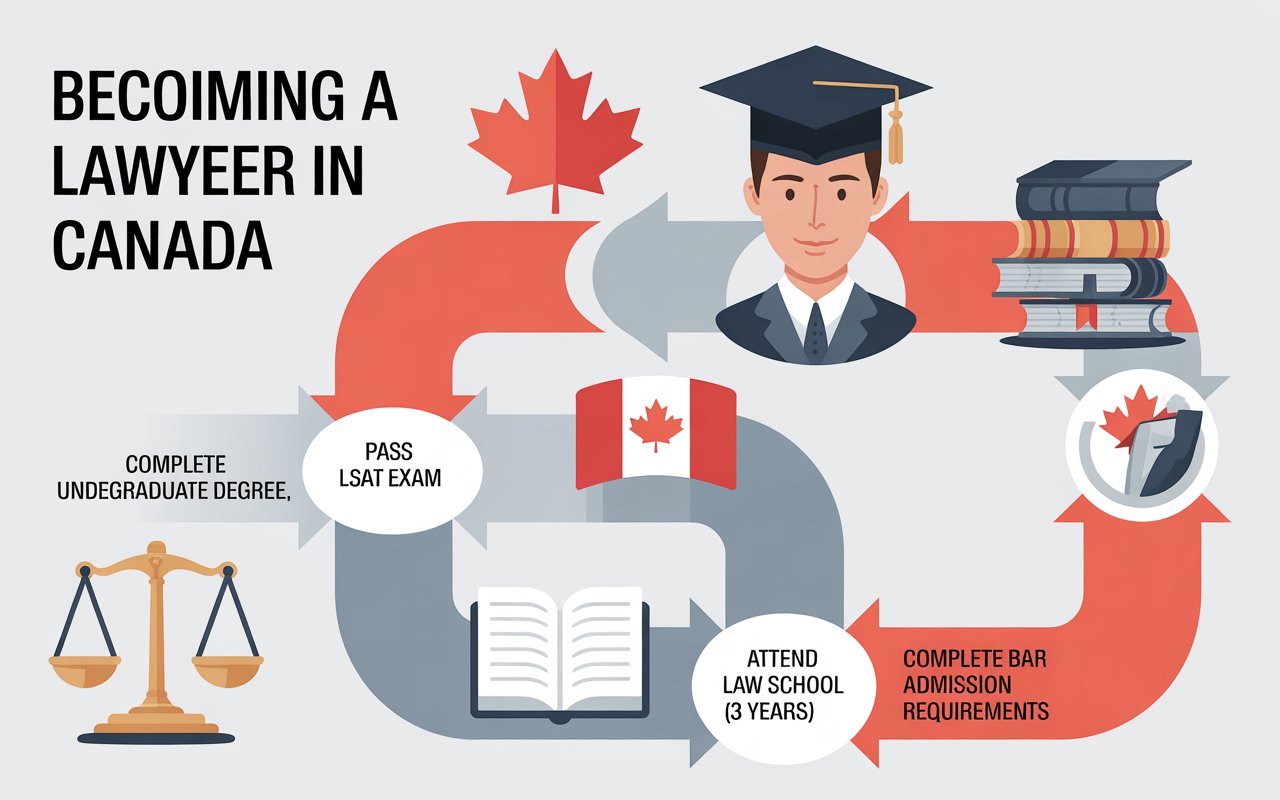
Becoming a lawyer in Canada is a structured, highly regulated process that requires careful planning and attention to detail. Whether you are a Canadian student preparing for law school or an internationally trained lawyer aiming to requalify, understanding the exact steps in 2026 is critical.
This guide provides a complete roadmap on how to become a lawyer in Canada, including education, licensing, and experiential training requirements.
Introduction – Understanding How to Become a Lawyer in Canada in 2026
The Canadian legal profession is regulated provincially and territorially, meaning each province has its own law society that governs licensing. There is no single national bar. However, the basic requirements across provinces are broadly similar, including formal legal education, bar examinations, and supervised practical experience.
Canada operates under a dual legal system:
-
Common Law: Applicable in all provinces except Quebec
-
Civil Law: Governs private law in Quebec
For internationally trained lawyers, 2026 is especially pivotal. The National Committee on Accreditation (NCA) continues to refine its competency-based assessment framework, while provinces are updating licensing programs like the Practice Readiness Education Program (PREP) and the Law Practice Program (LPP) to ensure candidates meet modern professional standards.
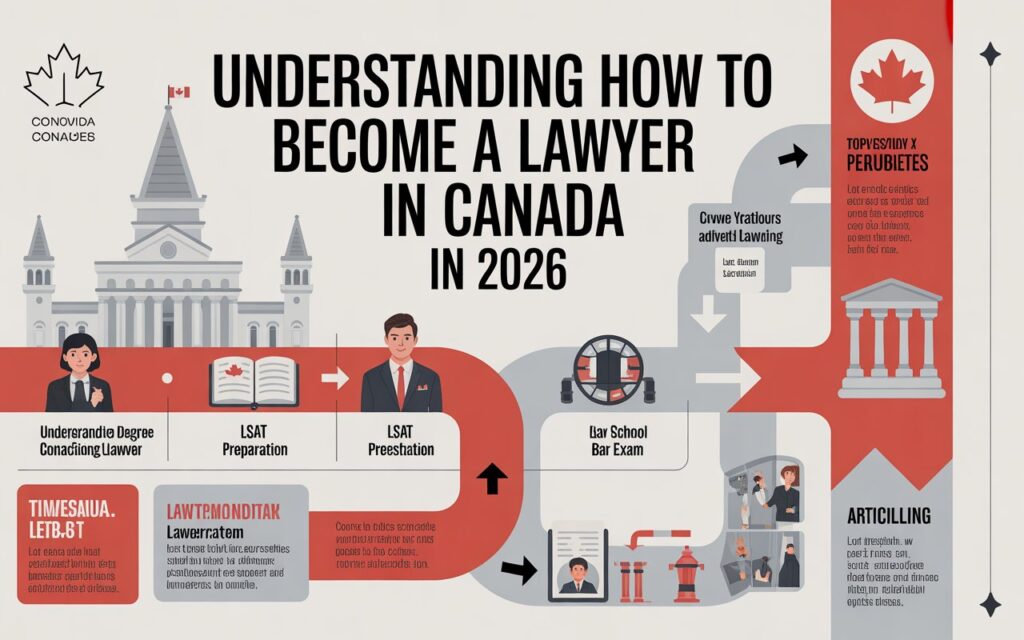
Path 1 – The Standard Academic Route for How to Become a Lawyer in Canada
For those pursuing the traditional Canadian legal education pathway, the process begins with undergraduate studies and culminates in provincial licensure.
Step 1 – Complete an Undergraduate Degree to Begin How to Become a Lawyer in Canada
The first step in how to become a lawyer in Canada is obtaining a bachelor’s degree. Unlike some countries, Canada does not require a “pre-law” major. Students from diverse disciplines—political science, history, economics, philosophy, or business—are all eligible to apply to law school.
Key tips:
-
Maintain a competitive GPA; law school admission is highly selective
-
Engage in extracurriculars, volunteering, and leadership activities to strengthen your profile
Completing a strong undergraduate program is the foundational academic milestone for aspiring Canadian lawyers.
Step 2 – Take and Ace the LSAT as Part of How to Become a Lawyer in Canada
Most Canadian law schools require the Law School Admission Test (LSAT).
2026 LSAT updates:
-
Fully digital and accessible via remote-proctored format
-
Sections include Logical Reasoning, Reading Comprehension, and Analytical Reasoning
Tips for success:
-
Competitive schools often expect scores of 160+, with top-tier institutions looking higher
-
Plan your exam 12–18 months before law school applications to allow for retakes if necessary
The LSAT remains a crucial step in how to become a lawyer in Canada, signaling your aptitude for legal reasoning and analysis.
Step 3 – Graduate with a Juris Doctor (JD) Degree to Advance How to Become a Lawyer in Canada
After completing undergraduate studies and the LSAT, the next step is earning a Juris Doctor (JD) degree from an FLSC-accredited Canadian law school.
Key details:
-
JD programs are typically three years
-
Core subjects include Constitutional Law, Criminal Law, Contracts, Torts, and Property Law
-
Upper-year electives allow specialization in areas like corporate law, immigration law, intellectual property, and litigation
Graduating with a JD is essential for meeting provincial licensing requirements and is the second key milestone in how to become a lawyer in Canada.
Path 2 – For Internationally Trained Lawyers: How to Become a Lawyer in Canada
Internationally trained lawyers must follow a slightly different path, starting with credential recognition before entering provincial licensing programs.
Step 1 – NCA Assessment: The First Step for How to Become a Lawyer in Canada
The National Committee on Accreditation (NCA) evaluates foreign law degrees to determine if they are equivalent to a Canadian JD.
Process:
-
Submit your foreign LLB, JD, or LLM
-
Provide academic transcripts and professional references
-
Undergo a competency-based assessment tailored to your legal education and experience
For foreign-trained lawyers, the NCA is the gateway in how to become a lawyer in Canada.
Step 2 – Clearing NCA Challenge Exams or Law School Courses to Fulfill How to Become a Lawyer in Canada Requirements
Most international candidates must complete five mandatory subjects to meet Canadian equivalency:
-
Foundations of Canadian Law
-
Canadian Constitutional Law
-
Canadian Administrative Law
-
Canadian Criminal Law
-
Professional Responsibility
Additionally, 2026 updates require candidates in some provinces to complete Legal Research and Writing (LRW) through CPLED or equivalent programs.
Successfully passing these exams or completing approved Canadian law courses is critical for continuing your path in how to become a lawyer in Canada.
Step 3 – Obtaining the Certificate of Qualification (CQ) for How to Become a Lawyer in Canada
Once all NCA requirements are met, candidates receive a Certificate of Qualification (CQ).
Key points:
-
The CQ certifies that your legal education meets Canadian standards
-
It allows you to enter a provincial bar licensing program
-
Typical timeline: 8–24 months, depending on exam completion
Obtaining the CQ is a major step toward practicing law in Canada for international candidates.
The Licensing Process: Final Steps on How to Become a Lawyer in Canada
Even after completing JD or NCA requirements, provincial licensing is mandatory.
Step 1 – Pass Bar Admission Examinations to Complete How to Become a Lawyer in Canada
Bar exams are the ultimate test of readiness to practice law.
Ontario (LSO):
-
Barrister Examination
-
Solicitor Examination
British Columbia & Alberta (2026):
-
Transitioned to the Practice Readiness Education Program (PREP)
-
Includes skills-based assessments, simulated practice, and exams
Passing these exams is a critical component of how to become a lawyer in Canada.
Step 2 – Complete Experiential Training (Articling) as a Crucial Step in How to Become a Lawyer in Canada
Articling involves 9–12 months of supervised legal practice under a licensed lawyer (Principal).
Ontario Alternative:
-
The Law Practice Program (LPP) allows candidates to complete structured practical training without traditional articling
Tips for securing articling:
-
Start applications early
-
Network across law firms, government, and corporate legal departments
-
Highlight Canadian legal knowledge and transferable skills
Articling or LPP completion is the experiential training requirement in how to become a lawyer in Canada.
Final Admission: Being Called to the Bar and Completing How to Become a Lawyer in Canada
Meet the Good Character Requirement
All candidates must satisfy the Good Character requirement, including:
-
Criminal background checks
-
Disclosure of past professional or academic misconduct
-
Ethical declarations
Honesty and transparency are key in meeting this requirement.
Participate in the Call to the Bar Ceremony
The Call to the Bar is the celebratory final step.
-
You take a formal oath
-
Receive your license to practice law in that province
-
Gain full legal authority to practice as a Canadian lawyer
This marks the culmination of all steps in how to become a lawyer in Canada.

Frequently Asked Questions About How to Become a Lawyer in Canada
How much does it cost to become a lawyer in Canada in 2026?
-
Canadian JD tuition: CAD 60,000–120,000
-
NCA process: CAD 4,000–8,000
-
Bar exams + licensing: CAD 3,000–5,000
Costs vary by province and law school.
Can I practice law in Canada with a foreign (e.g., Pakistani) LLB degree?
Yes, but you must:
-
Complete NCA assessment
-
Pass required exams or courses
-
Complete provincial bar and articling requirements
How long is the total timeline for how to become a lawyer in Canada?
-
Canadian JD route: 6–7 years
-
Foreign-trained route: 2–4 years
Timeline depends on exams, articling, and provincial processes.
Conclusion – Start Your Journey on How to Become a Lawyer in Canada Today
Becoming a lawyer in Canada in 2026 requires planning, dedication, and understanding the regulatory framework. Whether you follow the Canadian JD route or the NCA pathway as a foreign-trained lawyer, knowing the exact steps ensures success.
Confused by the NCA process or looking to move to Canada as a legal professional?
Contact ISLAW today for a specialized consultation on navigating the 2026 licensing requirements and building a successful legal career in Canada.




Add comment