

Introduction
Artificial Intelligence (AI) is revolutionizing industries globally, and the legal sector is at the forefront of this transformation. From automated legal research to AI-assisted judicial processes, technology is promising efficiency like never before. However, as AI plays a bigger role in court decisions, one critical question emerges:
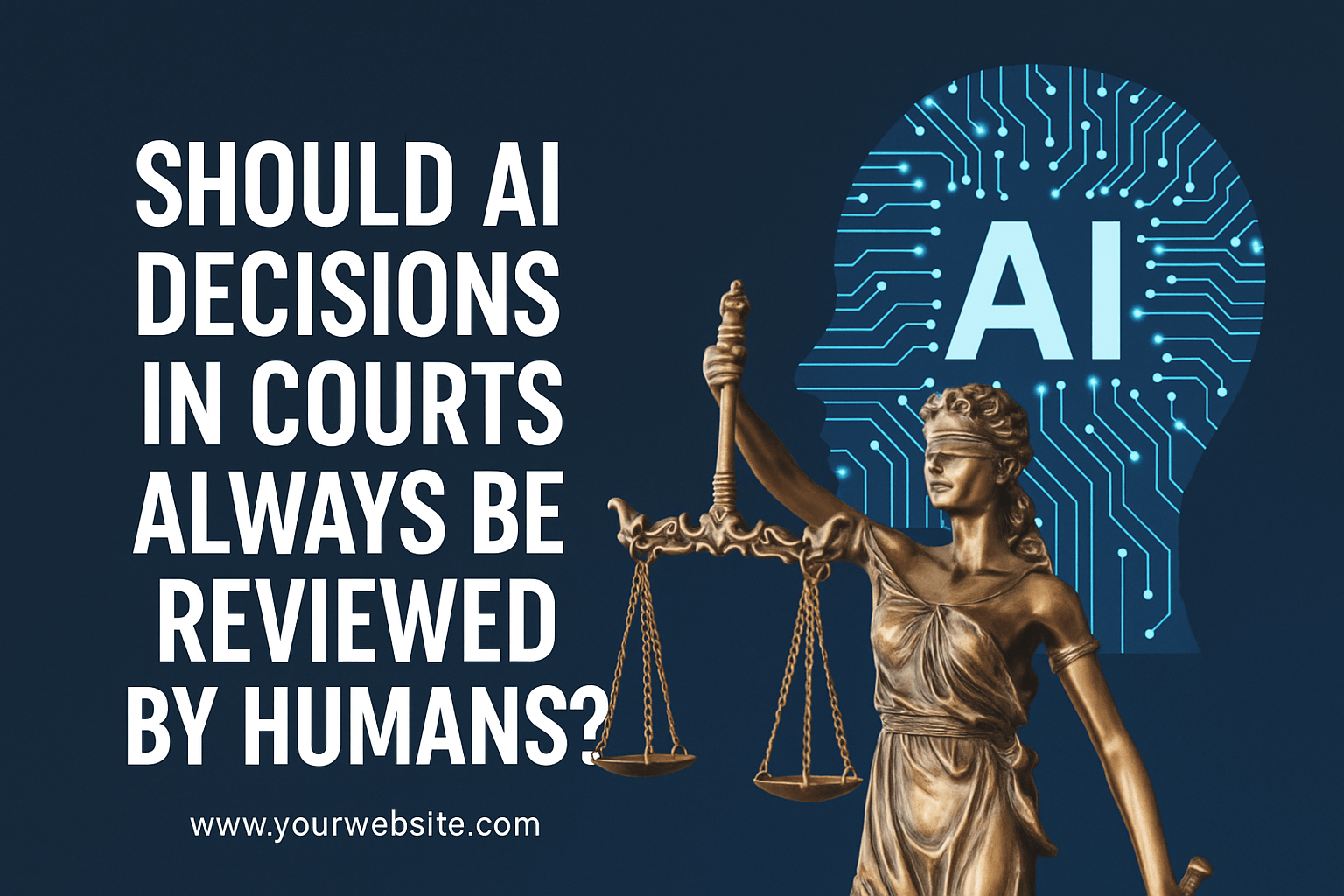
Should AI decisions in courts always be reviewed by humans?
This is not just a technical debate—it’s about justice, accountability, and human rights. In this article, we explore the role of AI in law, its benefits, risks, and why human oversight is essential.
The Growing Role of AI in Legal Systems
AI has become a powerful tool in the legal industry. Here’s how it’s transforming the sector:
-
Case Analysis: AI tools can scan thousands of documents, statutes, and case laws in seconds.
-
Predictive Analytics: Algorithms forecast case outcomes based on historical data.
-
Online Dispute Resolution (ODR): Platforms now use AI to assist in settlement negotiations.
-
Drafting Assistance: AI helps judges prepare opinions and streamline court proceedings.
These advancements help reduce backlogs and save time. However, convenience comes with major concerns about fairness and accountability.
For more insights into the legal system in Pakistan and technology adoption in courts, visit IS Law.
Risks of AI in Court Decisions
While AI offers efficiency, the risks are significant:
1. Algorithmic Bias
AI learns from past data, which often reflects societal biases. If discriminatory patterns exist in historical rulings, AI might repeat the same injustices.
2. Lack of Transparency
AI often works as a “black box.” Its reasoning process is not always clear, making it hard to challenge decisions.
3. Accountability Issues
Who is liable when AI makes a wrong judgment? The developer, the court, or the judge? This remains a gray area.
4. Absence of Human Judgment
AI lacks empathy and ethical reasoning—qualities essential for justice.
Global Response: AI Accountability Laws
Countries are taking action to regulate AI in the legal system:
-
European Union: Introduced the AI Accountability Act, requiring transparency and human oversight.
-
United States: Drafting legal frameworks to ensure due process with AI use in courts.
-
India & Middle East: Courts allow AI for research and drafting, but not for final decisions.
This shows a global trend: AI can assist, but humans must have the final say.

Why Human Review is Non-Negotiable
1. Protecting Justice
AI lacks contextual understanding. Human oversight ensures fairness, empathy, and moral reasoning in verdicts.
2. Preventing Errors
AI can make mistakes. Judges must validate AI outputs to avoid wrongful rulings.
3. Building Public Trust
People trust a justice system where humans—not machines—deliver final judgments.
AI Should Support, Not Replace Judges
The future of law lies in collaboration between humans and AI, not full automation. AI should handle routine work like data analysis, while judges focus on interpretation and final rulings.
For detailed guidance on legal practices and technology, check out IS Law—a trusted source for legal insights and services.
Best Practices for AI in Courts
-
Transparency: AI tools must explain how they reach decisions.
-
Human Oversight: Final decisions should always involve human judges.
-
Bias Checks: Regular audits to eliminate algorithmic discrimination.
-
Ethical Frameworks: Governments must enforce standards to protect human rights.
Conclusion
AI is a game-changer in law, but justice should never be left entirely to machines. Human review is essential to ensure fairness and protect fundamental rights.
The challenge is finding the right balance between efficiency and ethical responsibility in a rapidly evolving legal landscape.
What Do You Think?
Should AI decisions in courts always be reviewed by humans, or is AI advanced enough to take charge?
💬 Share your thoughts in the comments!








Add comment